March 16, 2026-Exchange NewsGreen Livelihoods Alliance
“Ipamana, huwag ipamina”: Defending the Last Ecological Frontier (Palawan, Philippines)
The Story of Palawan’s 50-Year Mining Moratorium
3–4 minutes
Palawan has long been celebrated as the last ecological frontier of the Philippines. This island province is a paradise of biodiversity; imagine hectares of land covered in lush green forests and crystalline blue waters, it is truly a breathtaking view, life-giving, and a home to Indigenous and local communities—the very communities that are key players when it comes to environmental protection and conservation.
However, for decades, this sanctuary has faced a persistent and growing threat: large-scale mining.
In a historic move to protect the island’s future, the provincial government of Palawan enacted the Palawan Mining Moratorium. Signed on March 5, 2025, this legislation represents a landmark victory for environmental conservation and the rights of the people. The moratorium is specifically a 50-year ban on new mining applications throughout the province. Its primary goal is to halt the further destruction of Palawan’s lush forest covers, life-giving rivers, and the sacred ancestral lands of its Indigenous inhabitants.
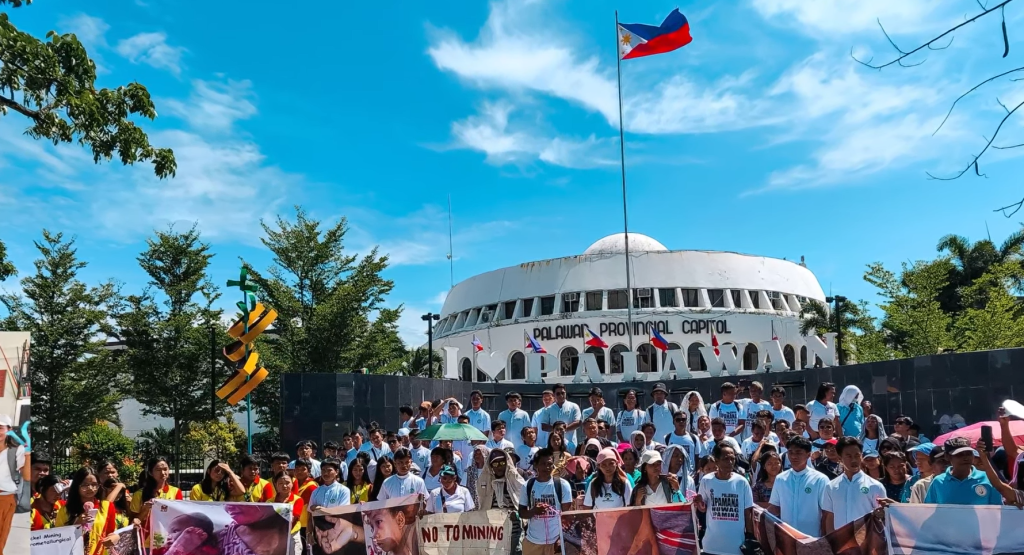
This victory was not achieved in isolation; it was the culmination of years of tireless advocacy. The moratorium is the fruit of collective action involving Indigenous and local communities, environmental organizations, individual advocates, and those who have the heart to give back what this Island is giving them—protection; protection from development aggressions that will cause nothing but harm not only to their common home but also to its people.
Photo courtesy of NTFP-EP Philippines (screen capture from the short film)
This movement brought together a diverse coalition, including faith-based groups, women’s organizations, and the youth, all united by a shared concern for their future. Their loud and persistent call for the protection of the environment was finally heard and acted upon by the local government of Palawan.
The Green Livelihoods Alliance (GLA) played a crucial role in these efforts by empowering local partners like NTFP-EP Philippines to amplify the calls of the people: “ipamana, huwag ipamina!” This is a collective call by environmental advocates to stop extractive and aggressive mining activities in the Philippines’ last ecological frontier. By providing a platform for the #KwentongKalikasanKwentongKomunidad series, the GLA helps ensure that the struggles and triumphs of Palawan’s Indigenous Peoples reach a global audience. Their support often includes capacity building for community monitoring and legal advocacy, which are essential components in securing long-term protections like the 50-year moratorium.
This landmark victory of the people of Palawan, especially its environmental stewards, Indigenous and local communities, is far more than just a legal ordinance. It is a vital shield for their culture, their rights, and their future. In previous years, the arrival of mining operations led to the displacement of communities and the destruction of essential water sources, farms, and traditional livelihoods. Now, there is a renewed opportunity for these communities to reclaim and restore their ancestral lands. The moratorium serves as a powerful symbol of hope, aiming to reunite communities that were once divided by the pressures of industrial exploitation.
Despite this significant achievement, the struggle to protect Palawan is far from over. Large corporations continue to eye the island’s rich natural resources, meaning the threat of exploitation persists. The video emphasizes that the community, especially the youth, must remain vigilant and active in monitoring and defending their environment. It is a call to action for everyone to stand as one in the protection of Palawan’s forests and natural resources. By listening to the voices from the forests, the people of Palawan, with Indigenous Peoples and local communities at the forefront of the march, are fighting to ensure that their paradise remains intact for the next fifty years and beyond.