

From Forest to Future: How Communities in Vietnam are Building Livelihoods from NTFPs
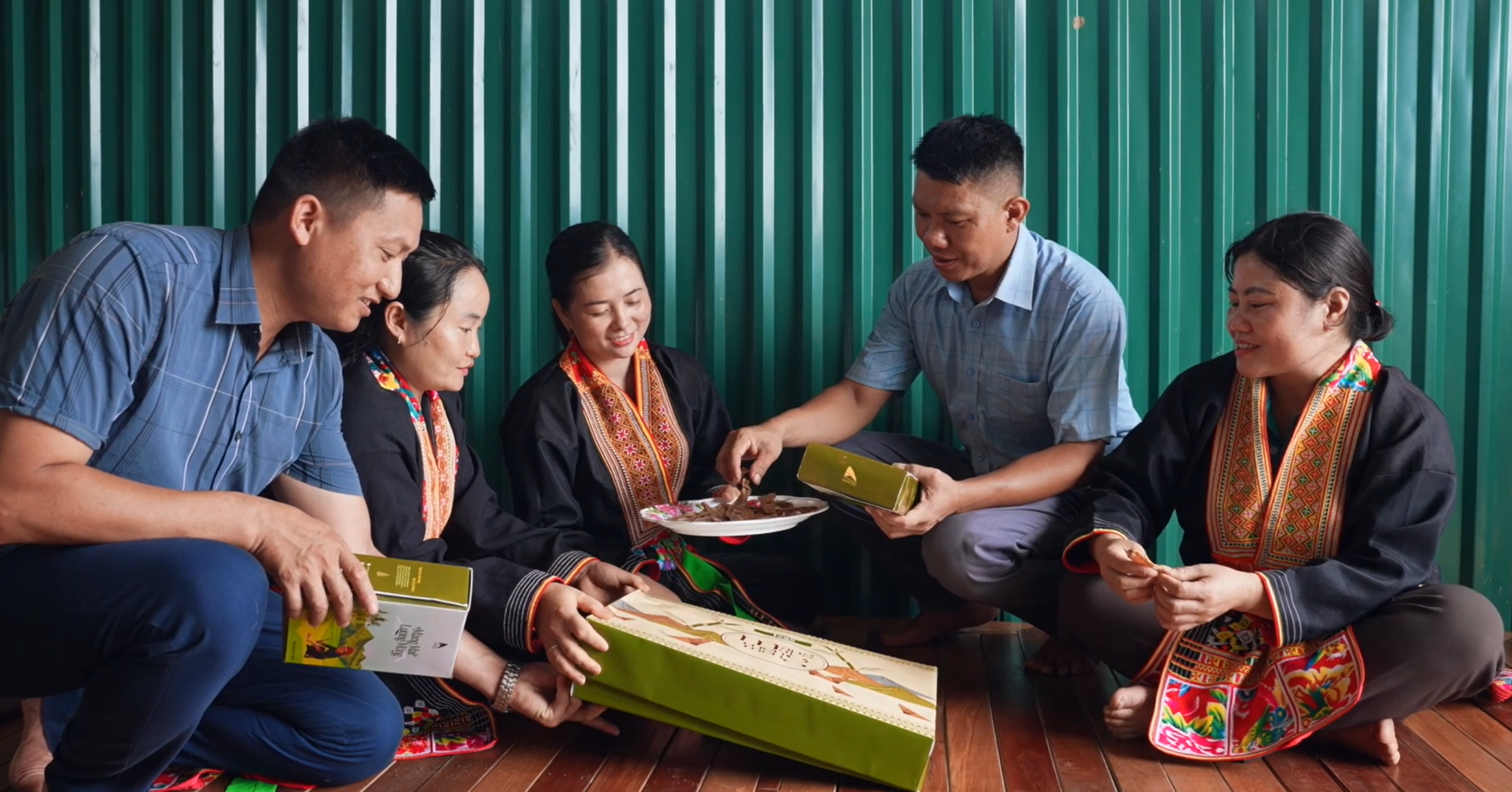
The completion of the AFoCO-CLMV Project marked more than the end of a technical initiative. Across Cambodia, Lao PDR, Myanmar, and Vietnam, it reflected a shift in how forest-dependent communities saw the resources around them, moving from the small-scale sale of raw materials toward stronger enterprises, better markets, and more resilient livelihoods.
For years, products such as the vibrant purple Ba Kich medicinal plant and the delicate flowers of Golden Camellia (Trà hoa vàng) were harvested and sold through informal, person-to-person transactions. While these products held considerable value, much of that value remained unrealized at the community level. Farmers had limited access to markets, processing facilities, packaging, and business knowledge, leaving them dependent on fragmented and often unpredictable buyers.
The AFoCO-CLMV project helped change that.
Rather than simply increasing production, the initiative supported communities in moving up the value chain. Raw forest products were transformed into higher-value commodities through improved processing, quality control, packaging, branding, and market development. In places such as Ba Che and Ky Thuong, enterprises began refining their products for more specialized and higher-end markets, while cooperatives strengthened their capacity to meet increasingly demanding quality standards.
The results were both economic and social. Where farmers once struggled to sell even a portion of their harvest through fragmented channels, stronger cooperative structures enabled them to reach markets more consistently, with some enterprises reporting sales of nearly their entire production. More stable income meant that families could better meet their daily needs while remaining within their communities and continuing to manage the forest resources that sustained them.
The transformation was not achieved by communities working alone. A defining strength of the AFoCO-CLMV partnership was the exchange of knowledge and experience across the region. Through training, exposure visits, and peer learning, farmers gained new perspectives on production, enterprise management, and market development. Communities began working more collectively, sharing knowledge and resources while investing in infrastructure that reduced the physical burden of production.
In Vietnam, for example, improvements in cultivation and processing helped increase dry flower production from 400 kilograms to 800 kilograms annually. After five years of cultivation, income from production reached an estimated 800 million to 1 billion VND (approximately 30,000 – 38,000 USD) per hectare. Community enterprises also expanded beyond local markets, reaching major urban centers such as Hanoi and Ho Chi Minh City and eventually showcasing their products at the Shanghai Fair in China.
Behind these figures was a deeper change in confidence. Farmers were no longer simply harvesting what the forest provided; they were learning how to understand markets, improving products, and collectively creating greater value from resources rooted in their landscapes. One local sentiment captured this spirit well: if I am doing well, I pull the person next to me along. Enterprise development became not only an individual opportunity, but a pathway for strengthening the wider community.
The experience of the AFoCO-CLMV Project demonstrates that forest conservation and economic development do not have to exist at opposite ends of the spectrum. When communities have the knowledge, infrastructure, market access, and collective structures to build viable forest-based enterprises, the value of the forest can extend far beyond the raw materials it provides.
The project may have reached its formal conclusion, but the enterprises it helped strengthen continue to carry the work forward. Their journey from informal forest-product trading to professional, market-oriented enterprises offers a glimpse of what becomes possible when local knowledge and community leadership are placed at the center of forest-based development.
From forest floor to global markets, the story of CLMV communities is ultimately a story of transformation; not away from the forest, but toward a future built around its enduring value.
A story linking peoples and forests for strengthening market linkages in Cambodia, Lao PDR, Myanmar, and Vietnam (CLMV) through the project (specifically, Output 2), “Capacity Building on Enhancing Resilience to Forest Fire, and Strengthening Local Livelihood, and Market Linkages (AFoCO/032/2022)” implemented by Non-Timber Forest Products Exchange Programme in Asia (NTFP-EP Asia), in cooperation with and funded by the Asian Forest Cooperation Organization (AFoCO) and ASEAN-Korean Cooperation Fund (AKCF).