

From Forest to Future
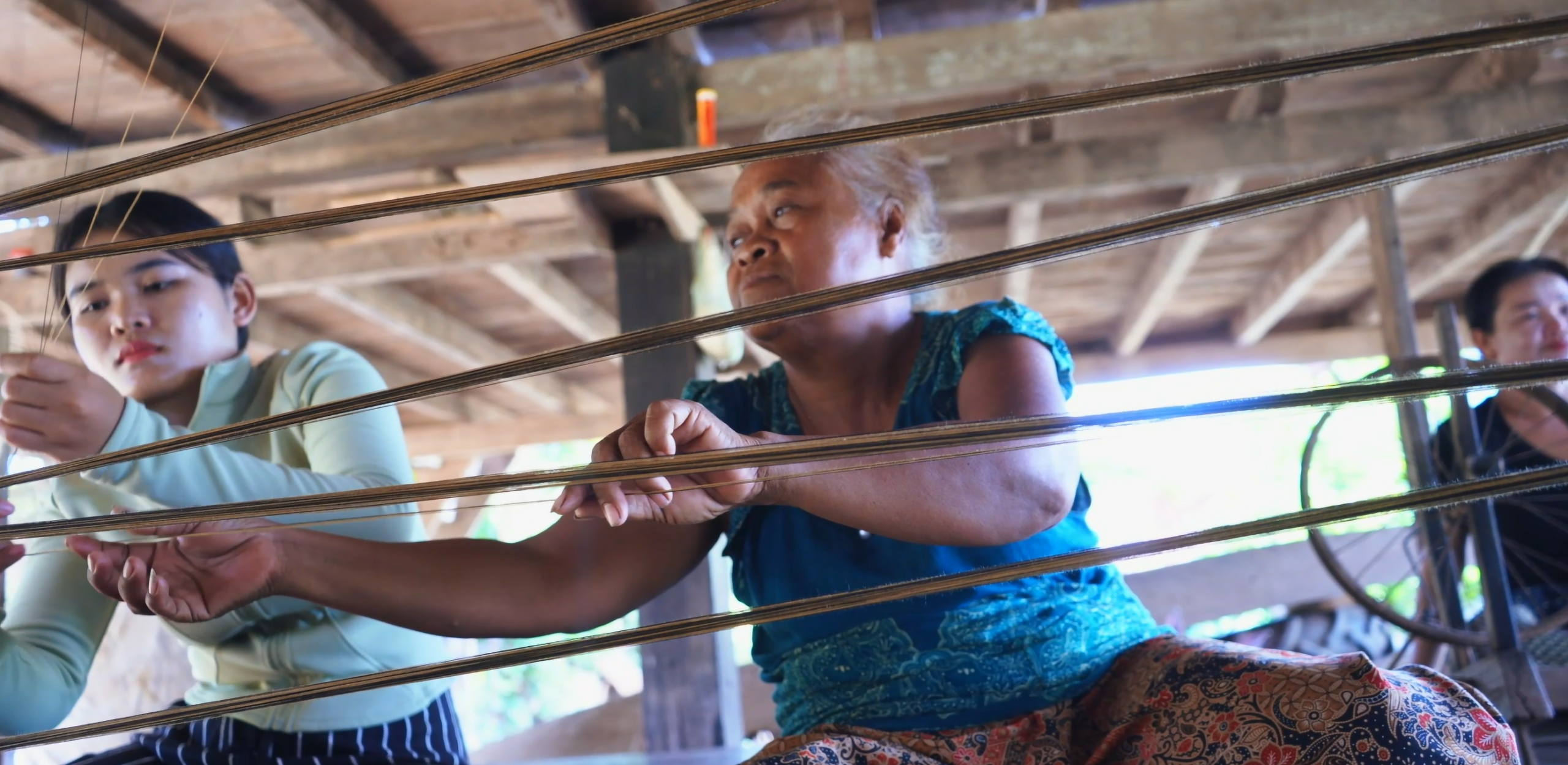
In Southeast Asia, forested landscapes are essential to the daily lives of Indigenous Peoples and local communities. For these peoples, forests are not just natural resources; they provide the foundation for sustainable livelihoods that support their socio-economic well-being and allow them to design their own resource management plans.
Addressing the challenges between external development pressures and local resource management requires a supportive regional approach. By integrating sustainable livelihood opportunities through community forestry enterprises (CFEs), community-based NTFP enterprises (CBNEs), and community forest livelihoods (CFLs), with forest conservation efforts, a collaborative initiative is helping to build economic stability and enhance resilience against threats like forest fires. This approach empowers the forest-based communities, including women and youth, of the CLMV region (Cambodia, Lao PDR, Myanmar, and Vietnam) to sustainably manage and protect forested landscapes while promoting equitable growth for our partner communities.
This necessity gave rise to the AFoCO-CLMV Project (AFoCO/032/2022), a strategic partnership between the Asian Forest Cooperation Organization (AFoCO), the ASEAN-Republic of Korea Cooperation Fund (AKCF), and implemented NTFP-EP Asia. The project focuses on Cambodia, Lao PDR, Myanmar, and Viet Nam (CLMV) Mekong region. One of the core outputs is clear: enhance forest fire management by strengthening local Micro, Small, and Medium Enterprises (MSMEs). This strategy recognizes that economic stability is a prerequisite for environmental stewardship. By fostering forest-based communities’ knowledge on sustainably harvesting and managing their forests and livelihoods alike, the project provides a sustainable economic alternative to land-clearing practices. Equipping communities with capacity-building programs and strong market linkages not only sustains local livelihoods but directly enhances their resilience against catastrophic forest fires.
Putting the AFoCO-CLMV’s strategies into practice on the ground leads to steady, visible empowerment for forest-based communities, allowing them to build a thriving community. In Cambodia, the traditional harvest of wild honey has been professionalized through the formal registration of the Wild Honey Enterprise in Phreah Vihear. Across the border in Lao PDR, four (4) Community Forestry Enterprises (CFEs) have been institutionalized, creating a blueprint for local governance. In Vietnam, the expansion of green intermediaries has successfully bridged the gap between forest harvesters and wider markets.
As the project officially had its closing ceremony in Hanoi last 26 June 2026, the focus transitions from implementation to an enduring legacy. This milestone is a beginning rather than an end. This ecosystem of cooperation ensures the region is prepared for both environmental shocks and the evolving opportunities for more sustainably managed forests.
Over the coming weeks, NTFP-EP Asia will release a three-part series diving into the people, the milestones, and the lasting impact of the AFoCO-CLMV Project. Join us as we explore the specific stories of how ASEAN is charting a path toward sustainable and equitable growth.
A story linking peoples and forests for strengthening market linkages in Cambodia, Lao PDR, Myanmar, and Vietnam (CLMV) through the project (specifically, Output 2), “Capacity Building on Enhancing Resilience to Forest Fire, and Strengthening Local Livelihood, and Market Linkages (AFoCO/032/2022)” implemented by Non-Timber Forest Products Exchange Programme in Asia (NTFP-EP Asia), in cooperation with and funded by the Asian Forest Cooperation Organization (AFoCO) and ASEAN-Korean Cooperation Fund (AKCF).