

Searching for Luzon’s Lost Birds: What the Forests of the Kalanguya-Ikalahan Ancestral Domain Revealed
Programme Officer for Community-based Conservation; member of IUCN Species Monitoring Specialist Group and IUCN Commission on Ecosystem Management Biodiversity surveys in the Kalanguya–Ikalahan Ancestral Domain confirm the presence of the elusive Luzon Rail and reveal new insights into the bird diversity of Nueva Vizcaya. What does it mean when a bird is considered “lost”?Written by Sunshine Telio
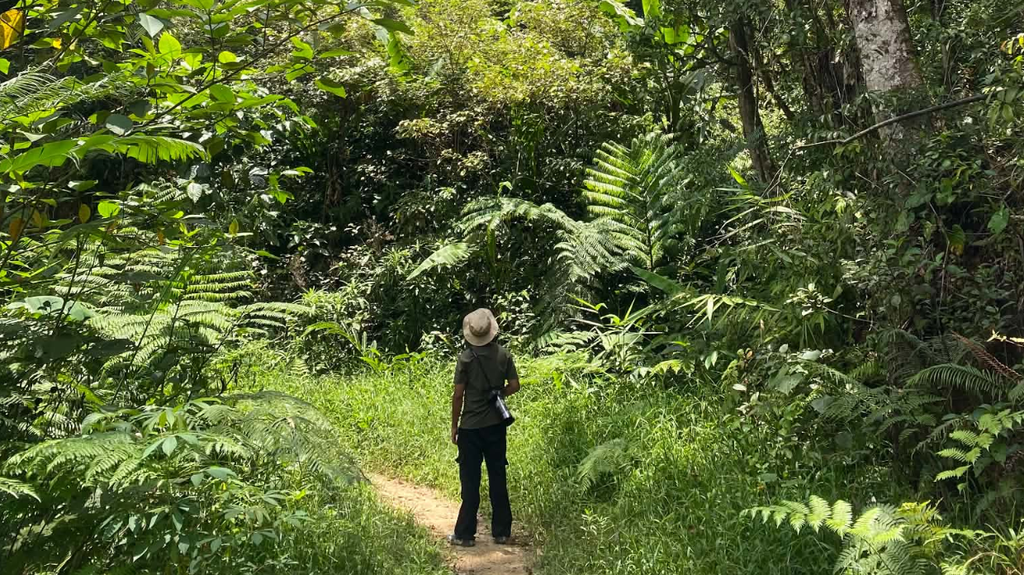
Photo courtesy of K. Manuel (2026)
Perhaps it has disappeared from the forests where it was once known to occur. Or perhaps it has simply remained unseen and undocumented for 10+ years, leaving questions about whether it continues to survive in the wild.
For some of the Philippines’ most elusive birds, the absence of recent scientific records has left much of their existence and ecology shrouded in uncertainty.
In July 2026, a research team ventured into the forests of Barangays Imugan and Bantinan in Sta. Fe, Nueva Vizcaya, hoping to find answers.
Their search focused on two rarely documented bird species found only in Luzon: the Luzon Rail (Lewinia mirifica) and the Luzon Buttonquail (Turnix worcesteri).
What began as a search for two elusive birds eventually offered a broader glimpse into the remarkable biodiversity of the Kalanguya–Ikalahan Ancestral Domain, and the importance of continued research, Indigenous knowledge, and community participation in conserving these landscapes.
Into the Forest: The Search Begins
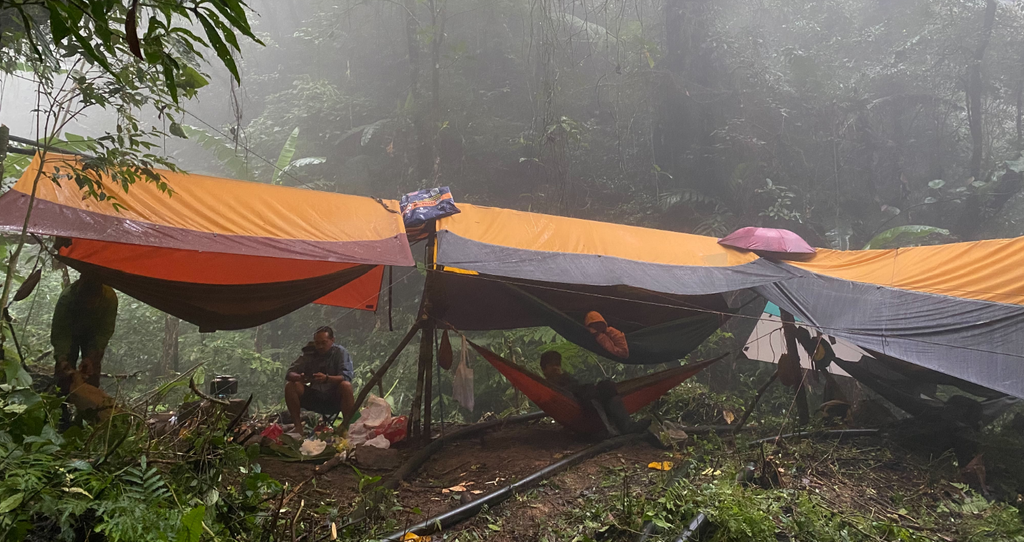
Campsite – Photo by: K. Manuel (2026)
From July 14 to 23, 2026, a biodiversity survey was conducted in the forests of Imugan and Bantinan by a team of Filipino bird researchers composed of Kenneth Manuel, Erwin Torio, Dariel Renz Naguit, Christian Cid, Jhoanna Sissay, and Sunshine Telio of NTFP-EP Asia, in collaboration with local communities and conservation partners.
The survey combined different methods to maximize the chances of detecting the two target species. Researchers walked forest transects, deployed camera traps and acoustic recording devices, conducted mist-netting, and documented birds encountered during field observations.
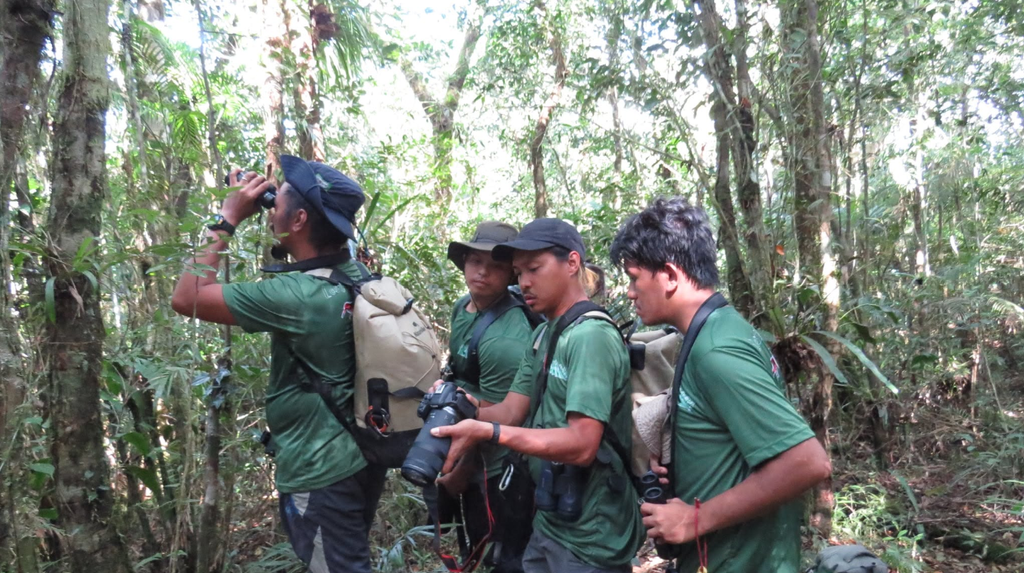
Team surveying birds – Photo by: J. Sissay (2026)
The survey combined different methods to maximize the chances of detecting the two target species. Researchers walked forest transects, deployed camera traps and acoustic recording devices, conducted mist-netting, and documented birds encountered during field observations.
Community members and local guides played an important role in supporting field activities. Their familiarity with the landscape and observations of local wildlife offered additional perspectives that complemented scientific survey methods.
In Bantinan, the researchers also observed akik, a local bird-catching practice, which provided opportunities to document bird species and learn from community observations. Birds captured during these activities and through mist-netting were documented and released.
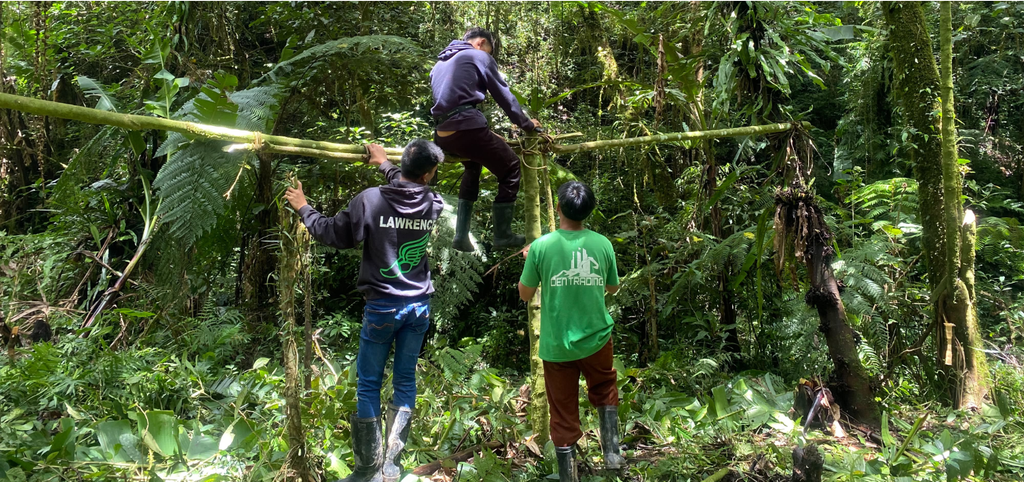
Community members help set up camp – Photo by: K. Manuel (2026)
Across the two barangays, the team recorded 99 bird species, providing valuable baseline information on local bird diversity and identifying several noteworthy findings.
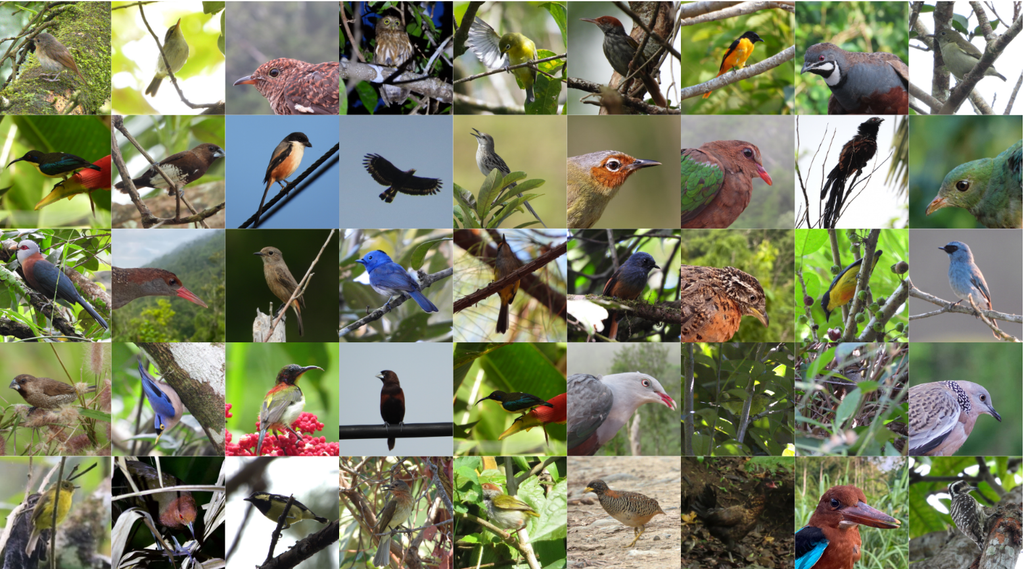
Birds of Nueva Vizcaya – Photos by: D. R. Naguit, K. Manuel, J. Sissay, E. Torio and C. Cid (2026)
An Elusive Bird Confirmed: The Luzon Rail
Among the survey’s most significant findings was the confirmation of the Luzon Rail (Lewinia mirifica) in Imugan.
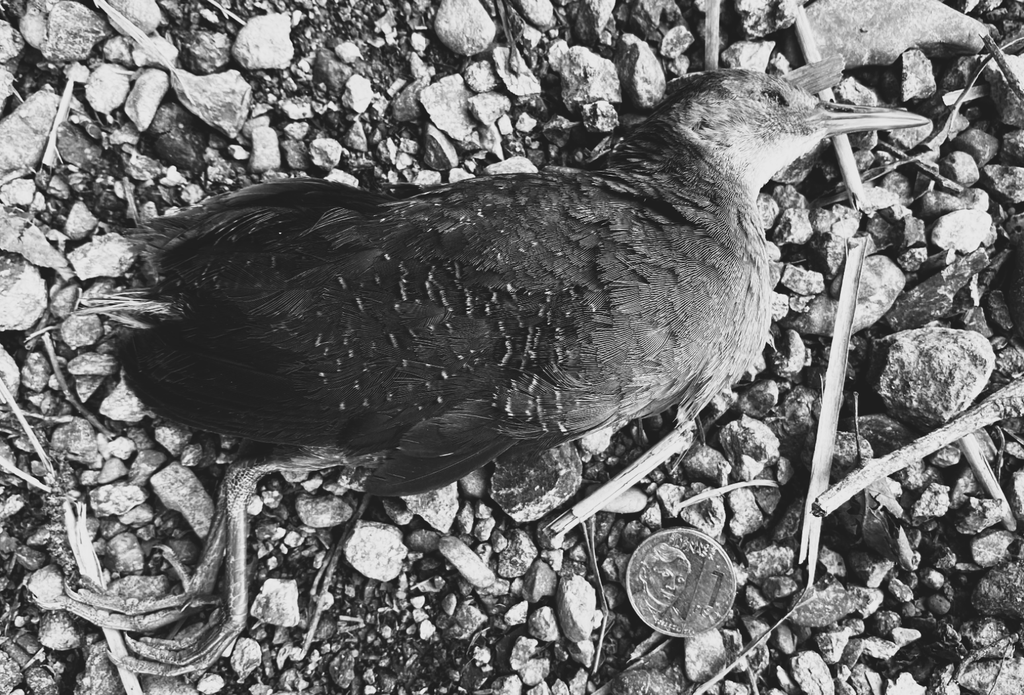
Luzon Rail Specimen – Photo by: K. Manuel (2026)
On July 23, 2026, as the researchers were returning from their final morning transect, the team encountered a freshly dead bird along a trail. The team quickly identified the bird as a rail species, but could not immediately confirm if it was just a juvenile Slaty-breasted Rail or the sought after Luzon Rail. After some debate and reading the Allen (2020) Birds of the Philippines guide book, it was determined that the specimen’s whitish throat, paired with its unbarred primary feathers gave it the distinct features of the Luzon Rail. Though confident, the team waited for the confirmation of other Philippine avian experts to verify the sighting. The cause of death remains unknown and a deceased individual is not what the team had hoped to encounter. Still, the sighting remains a significant finding as it provided evidence of the species’ presence in the area.
The finding was further supported by a photograph provided by a local community member showing a live juvenile Luzon Rail reportedly captured in 2025.
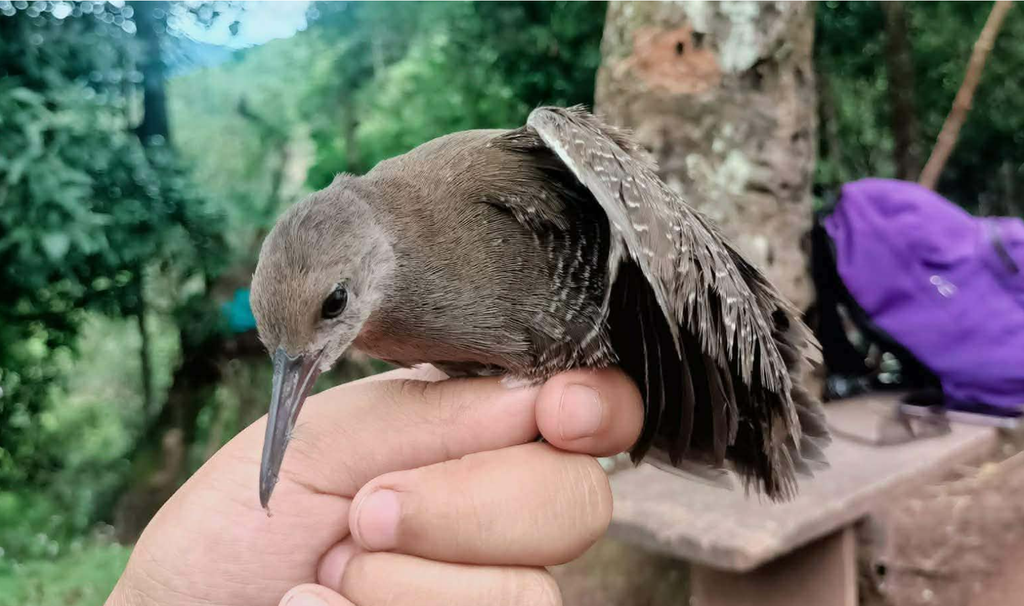
Juvenile Luzon Rail – Photo by: Mehana B. Calomente (2025)
Both records were reviewed and verified by Philippine avian experts Desmond Allen and Dr. Jelaine Gan.
For a species with limited recent scientific documentation, these records are particularly meaningful.
The findings do not establish species abundance, distribution, nor does it give an indication of its population status. ie. However, the confirmation of its presence in the area provides an important basis for further investigation into their ecology, habitat requirements, and conservation needs. Furthermore, the specimen found seems to be the first record for the month of July. Previously, the species had been observed from May–June at Dalton Pass, before seemingly disappearing from the area between July and September. It is then observed again from October to December, coinciding with the middle of the akik season. This sighting, alongside accounts from local community members who have also reported the species’ seasonal disappearance, calls into question the theory that it may be a local migrant. Further investigation into the species’ range and distribution should be prioritised to better understand its movements and establish whether it leaves the area between July and September.
More Discoveries – and Questions That Remain
The survey also yielded other noteworthy observations.
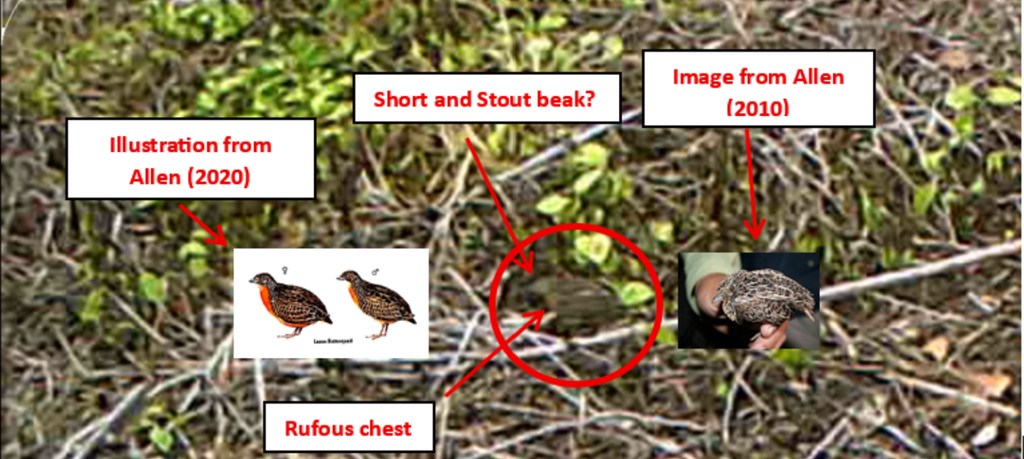
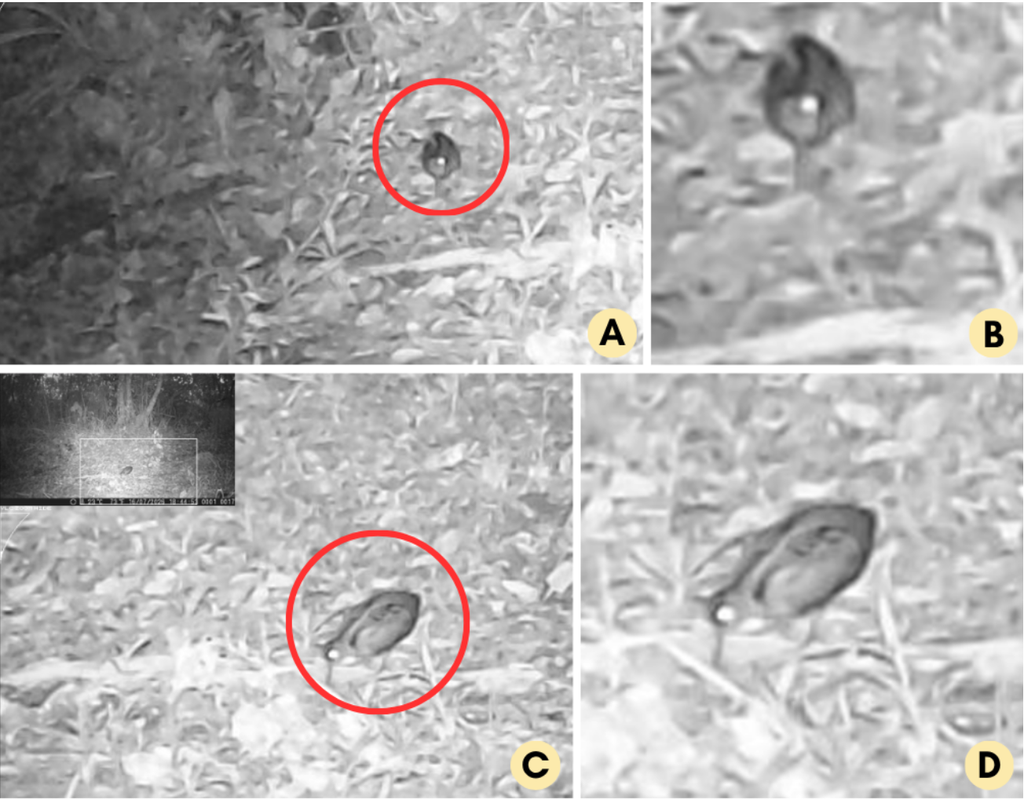
Comparing camera trap still images to illustration and photos of the Luzon Buttonqual – Photo by: Lost Birds of Luzon Project
In Bantinan, a camera trap recorded a ground-dwelling bird that initially appeared to resemble the Luzon Buttonquail. The footage was reviewed with an avian expert, but the species’ identity could not be conclusively established.While the record remains unconfirmed, it provides an interesting lead for future surveys targeting the Luzon Buttonquail and a proof of concept that camera traps may be an effective way to rediscover this bird.
Another significant finding was the documentation of two Bukidnon Woodcocks (Scolopax bukidnonensis) through camera trapping in Bantinan.
This record is particularly noteworthy because historical bird specimens collected in the area during the 1960s had been subject to identification uncertainty. Though a sighting was listed on eBird in January 2010, no photographic evidence has been published or uploaded to support this claim. So, the new camera-trap captures may provide the first evidence of the species’ presence in Nueva Vizcaya since the late 1960s.
Together with the wider inventory of 99 bird species, these findings underscore the ecological importance of the forests surveyed and the need to continue documenting their biodiversity.
They also demonstrate how much remains to be learned about the distribution and ecology of Philippine birds, even in landscapes where people have lived and interacted with nature for generations. (Camera Trap images of the Bukidnon Woodcock – Photo by: Lost Birds of Luzon Project)
Lost to Whom? Bringing Together Different Ways of Knowing
The term “lost birds” raises an interesting question: Lost to whom?
In scientific research, a species may be considered lost or elusive because it has not been reliably documented for many years. Yet the absence of scientific records does not necessarily mean that a bird has disappeared from the landscape, or that people living in the area have never encountered it.
Within the Kalanguya–Ikalahan Ancestral Domain, different species of rails are known to occur, although distinguishing one species from another is not always straightforward. Birds may share similar physical characteristics, behaviors, or habitats, making identification challenging even for those familiar with the local environment.
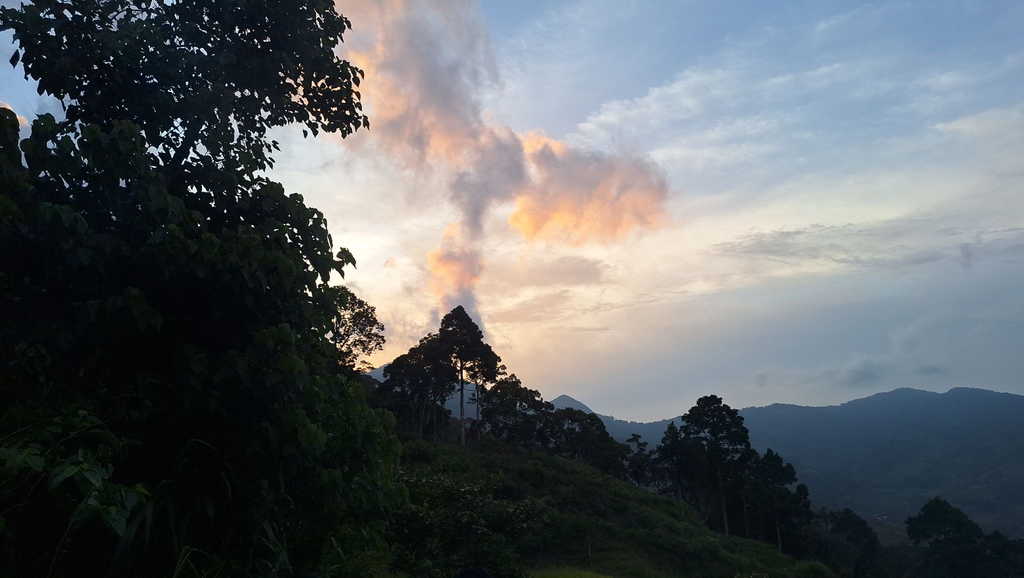
Dusk at Bantinan – Photo by: C. Cid (2026)
This was one of the interesting dimensions of this Lost Birds Project. Community observations and accounts of wildlife encounters provided valuable information, but determining whether these involved the Luzon Rail required additional scientific documentation and expert verification.
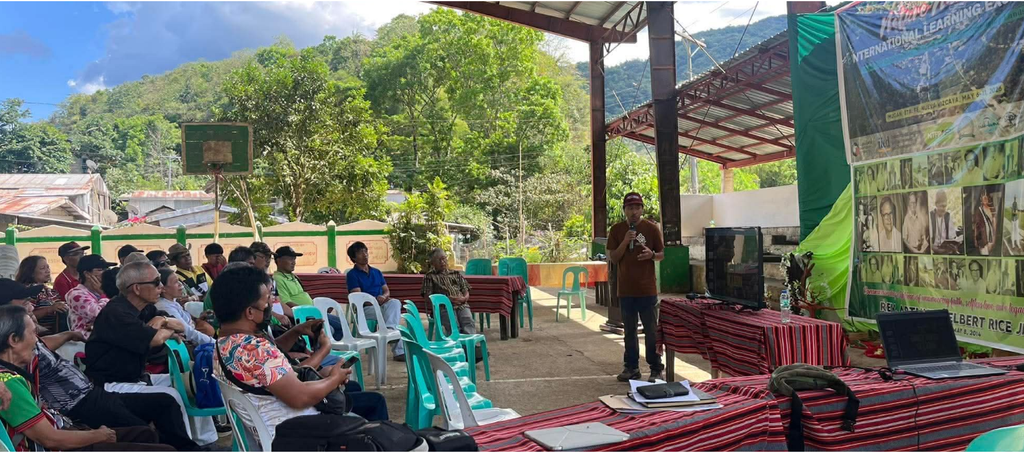
Initial community presentation – Photo by: W. Kampitan (2026)
Rather than treating Indigenous knowledge and scientific research as competing explanations, the experience highlights how different forms of knowledge can complement one another.
Local knowledge offers insights developed through generations of living in and interacting with the landscape, while scientific methods can help document and distinguish species and investigate questions that remain unanswered. Both can contribute to a deeper understanding of local biodiversity.
Perhaps the more important question, then, is not simply whether a bird was lost or found, but how much of our understanding of biodiversity remains incomplete when different ways of knowing are not brought into conversation.
Beyond the Search: Connecting Biodiversity Research with Community-Based Conservation
For NTFP-EP Asia, the significance of this research extends beyond the documentation of rare bird species. It reflects the importance of community-based conservation (CBC), which recognizes Indigenous Peoples and local communities as central actors in the governance, management, and conservation of their territories and natural resources.
The Kalanguya–Ikalahan Ancestral Domain is not only a habitat for wildlife. It is also a living landscape that supports Indigenous livelihoods, cultural practices, traditional knowledge, and relationships with the forest.
These relationships are particularly relevant to the sustainable management of non-timber forest products (NTFPs), which provide food, materials, medicine, livelihood opportunities, and other benefits to forest-dependent communities.
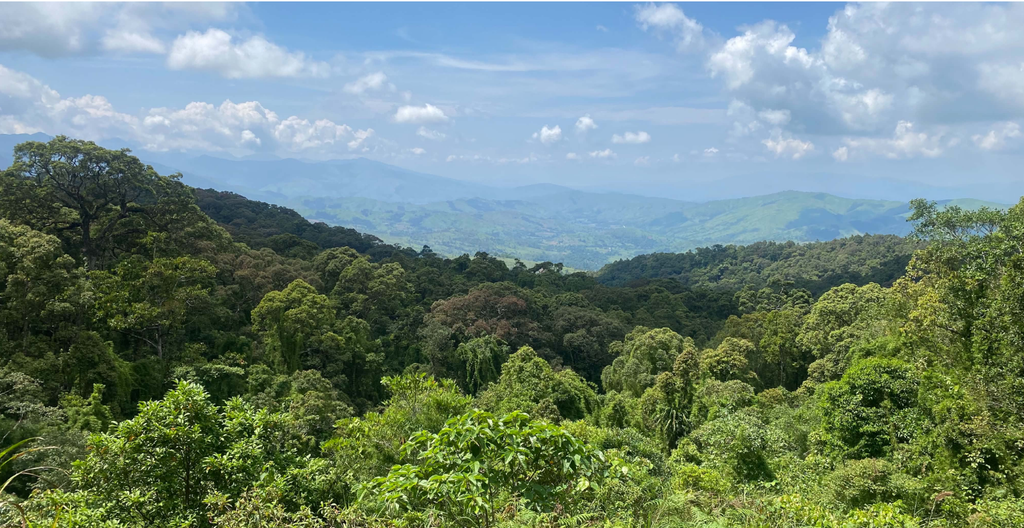
Kalanguya-Ikalahan Ancestral Domain – Photo by: K. Manuel (2026)
The conservation of wildlife and the sustainable management of NTFPs are interconnected because both depend on the ecological integrity of the landscapes where they are found. Forest ecosystems support a diversity of plants, animals, and ecological processes, many of which also sustain the resources that communities depend on.
Although the Lost Birds Research did not directly assess NTFP availability or productivity, its findings contribute an additional layer of biodiversity information that can help communities and conservation partners better understand the ecological significance of their forests.
This information can complement existing Indigenous knowledge, community resource management practices, and conservation planning initiatives. It can also strengthen the evidence available to communities when engaging in discussions about forest protection, land use, and sustainable resource management.
Equally important is how the research was undertaken. From securing permission through Indigenous institutions to involving community members and local guides in field activities, the initiative demonstrated the importance of conducting research with communities and respecting their role in decisions concerning their ancestral territories.
For NTFP-EP Asia, community-based conservation is not only about protecting particular species or resources. It is about strengthening the relationships, knowledge systems, institutions, and collective efforts that enable Indigenous Peoples and local communities to sustain their forests and territories over time.
What Comes After Finding a Lost Bird?
Finding evidence of an elusive bird species is only one part of the story.
Equally important are the questions that follow: What conditions allow these birds to persist? What threats might affect their habitats? How can research findings support the communities who have long been caring for these landscapes?
The research team has identified several directions for future work, including additional bird surveys, more targeted studies of the Luzon Rail and Luzon Buttonquail, and improved approaches to biodiversity monitoring.
Continued collaboration with local communities will be essential in understanding the ecological conditions that support these species and identifying appropriate conservation measures.

Bantinan and Imugan survey teams – Photos by: E. Torio (2026)
For NTFP-EP Asia and its partners, the research contributes to ongoing efforts to connect biodiversity documentation with community-based conservation, Indigenous knowledge, and locally grounded environmental governance.
Finding a bird may answer one scientific question.
Understanding the forest it inhabits and supporting the people who care for it, is a much longer conservation journey. Ultimately, the search for Luzon’s lost birds is not only about discovering what remains hidden in the forests. It is also about recognizing the importance of the landscapes that sustain biodiversity and the communities whose lives, knowledge, and futures are closely connected to them.
The research may have answered one question about the presence of the Luzon Rail, but it has also opened many more questions about the biodiversity of the Kalanguya–Ikalahan Ancestral Domain and how it can be conserved for future generations.
The Search for Luzon’s Lost Birds was conducted by a team of Filipino bird researchers composed of Kenneth Manuel, Erwin Torio, Dariel Renz Naguit, Christian Cid, Jhoanna Sissay, and Sunshine Telio with the support and collaboration of the Kalahan Educational Foundation (KEF) Nature Nurture Team, the Federation of Ikalahan/Kalanguya Ancestral Domain Owners (FIKADO), the Municipality of Santa Fe, and the communities of Imugan and Bantinan. The team also acknowledges Winona Kampitan for her contributions to the development of the research proposal and preliminary coordination which helped lay the groundwork for the field surveys.